CRA-deadlines 2026 och 2027: vad som gäller, vad som är blockerat
CRA-tidslinjen: rapportering gäller sedan 11 september 2026 och förordningens huvudskyldigheter gäller fullt ut från 11 december 2027.

I denna artikel
Den 17 oktober 2026 listar NANDO inga anmälda organ under CRA, och kommissionens CRA-sida om bedömning av överensstämmelse (senast uppdaterad 31 juli 2026) anger att NANDO listar CRA-anmälda organ när de blir tillgängliga. Ingen CRA-harmoniserad standard har publicerats i EU:s officiella tidning. ENISA:s rapporteringsplattform är i drift sedan den 11 september 2026, när obligatorisk rapportering började gälla.
Tillverkar du produkter med digitala element för EU-marknaden är detta den faktiska situationen: vad du måste ha på plats nu, vad som är blockerat just nu och varför självbedömning för Viktig klass I inte fungerar idag.
Sammanfattning
Sedan 11 juni 2026 gäller den mekanism som gör att medlemsstater formellt kan notifiera anmälda organ till kommissionen. Det är inte en deadline för tillverkare. Per 17 oktober 2026 listar NANDO inga CRA-utsedda anmälda organ. Det är därför du inte kan starta en CRA-bedömning av ett anmält organ förrän ett organ är formellt listat för CRA.
Tidslinje i korthet
- Passerad milstolpe
- Milstolpe för tillämpning
- Slutdatum
- Ekosystem-milstolpe
Lägesbild för harmoniserade standarder den 17 oktober 2026 och för anmälda organ den 17 oktober 2026, mot de två ankardatum som binder tillverkare.
Datumreferens
| Datum | Milstolpe | Vem det påverkar |
|---|---|---|
| 10 dec 2024 | CRA träder i kraft | Tillverkare, importörer och distributörer |
| 11 jun 2026 | Mekanismen för notifiering av anmälda organ öppnar | Medlemsstater och organ för bedömning av överensstämmelse |
| 11 sep 2026 | Rapportering av sårbarheter och incidenter är obligatorisk | Tillverkare |
| 11 dec 2026 | Medlemsstaterna ska sträva efter ett tillräckligt antal anmälda organ (artikel 35.2) | Ekosystemkontext |
| 11 dec 2027 | Full CRA-tillämpning | Tillverkare, importörer, distributörer |
Punkter du inte kan kringgå
Harmoniserade standarder och utsedda anmälda organ saknas fortfarande. ENISA:s rapporteringsplattform är i drift sedan den 11 september 2026. Tills de två första finns på plats är delar av CRA-vägen formellt otillgängliga, oavsett hur redo din produkt är. Känn till dem innan du fastställer din tidslinje.
Inga harmoniserade standarder
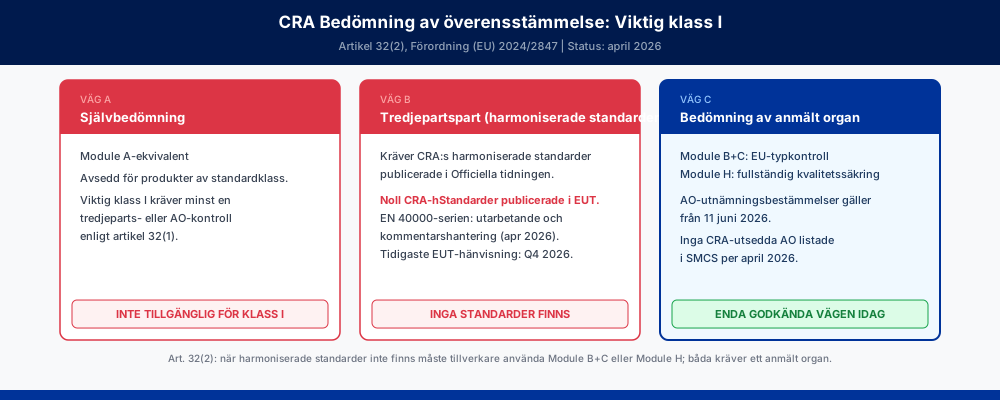
Tillverkare av Viktig klass I får använda förfarandet med intern tillverkningskontroll (modul A) bara när de har tillämpat harmoniserade standarder, gemensamma specifikationer eller ett europeiskt cybersäkerhetscertifieringsschema på säkerhetsnivå minst "väsentlig". Där de saknas eller bara tillämpas delvis kräver artikel 32.2 EU-typkontroll (modul B+C) eller fullständig kvalitetssäkring (modul H), båda med ett anmält organ. Per 17 oktober 2026:
- Kommissionens sida för harmoniserade standarder har ingen post för Förordning (EU) 2024/2847.
- Inga gemensamma specifikationer har antagits för CRA.
- Ingen delegerad akt utser något europeiskt cybersäkerhetscertifieringssystem som CRA-presumtionsväg för överensstämmelse.
Där standarder inte finns är reservvägen Module B+C (EU-typkontroll) eller Module H (fullständig kvalitetssäkring). Båda kräver ett anmält organ.
Tillverkar du en produkt av Viktig klass I ska du alltså inte planera kring självbedömning förrän standardvägen finns. Tills vidare är bedömning av anmält organ den enda tillgängliga vägen för produkter som inte kan använda en annan väg till presumtion om överensstämmelse.
CEN-CLC/JTC 13/WG 9 utvecklar delarna av EN 40000-1. Status i oktober 2026:
- EN 40000-1-1 (Terminologi): under godkännande hos CEN-CENELEC. Ratificeringen är planerad till den 2 november 2026 och tillgängligheten till den 18 november 2026.
- EN 40000-1-2 (Principer, riskhantering för produkter och livscykelaktiviteter): under godkännande. Ratificeringen är planerad till den 2 november 2026 och tillgängligheten till den 18 november 2026.
- CEN-CENELEC noterar "No citation expected" i Europeiska unionens officiella tidning för båda. De ger ingen presumtion om överensstämmelse, så de ändrar inte bilden för klass I ovan.
- prEN 40000-1-3 (Sårbarhetshantering): offentlig remiss pågick december 2025 till februari 2026. Den är under godkännande, och ingen hänvisning i officiella tidningen är bekräftad.
- prEN 40000-1-4 (Generella säkerhetskrav): fortfarande under utarbetande.
- De 17 vertikala typ C-standarderna från ETSI är i ETSI:s godkännandeprocedur. Samtliga 17 remissutkast finns i den offentliga mappen.
Ingen CRA-standard har ett bekräftat datum för hänvisning i officiella tidningen. De två första ratificeringarna, planerade till den 2 november 2026, gäller de två delar för vilka CEN-CENELEC anger ”No citation expected”.
Inga anmälda organ
Kapitel IV gäller sedan 11 juni 2026. Enligt artikel 35.2 ska medlemsstaterna sträva efter att senast den 11 december 2026 säkerställa ett tillräckligt antal anmälda organ i unionen. Det är en skyldighet att göra sitt bästa som gäller medlemsstaterna, och ingen garanti för varje produktkategori eller medlemsstat. Per 17 oktober 2026 listas inga CRA-utsedda anmälda organ i NANDO. Per den 17 oktober 2026 listar NANDO Irland och Finland som CRA-anmälande myndigheter.
Behöver du en bedömning av Viktig klass I genomförd före december 2027, räkna med:
- Förberedelse av teknisk dokumentation: 3 till 6 månader.
- Module B+C-bedömning: 2 till 4 månader per produkt.
- Tillgänglighet till anmält organ: osäker nu när formell utnämning enligt kapitel IV har öppnat.
Kontakta organ för bedömning av överensstämmelse nu. Den formella mekanismen har öppnat, även om CRA-kapacitet ännu inte visas i NANDO. Att vänta tills kapaciteten mognar gör det mindre sannolikt att du hinner genomföra bedömningen före december 2027.
Förberedelser för ENISA:s rapporteringsplattform
Den gemensamma rapporteringsplattformen är öppen sedan den 11 september 2026 på portal.cra-srp.enisa.europa.eu. På startsidan väljer du rollen Assigned Representative och loggar in med EU Login. EU Login-konton är personliga och måste ha flerfaktorsautentisering aktiverad. ENISA uppdaterade sina guider för registrering, gränssnitt och anmälan senast den 12 september 2026, vid sidan av en lista över koordinator-CSIRT daterad 10 september. Den 12 oktober 2026 uppgraderade ENISA plattformen till version 1.1 och gav ut AR User Manual på nytt som version 1.1, med alla skärmar. Ordlistan är i version 1.5 (15 oktober 2026, 42 fält) och FAQ:n uppdaterades den 15 oktober 2026. De beskriver Assigned Representative, det SRP-konto som rapporterar för tillverkarens räkning, så de gäller även utan utsedd auktoriserad representant. ENISA anger fortfarande att allt är bästa tillgängliga kunskap i dag och kan ändras. Se ENISA SRP-registrering.
Vad du kan göra nu:
- Utarbeta notifieringsmallar för de fyra stegen: 24 timmar, 72 timmar, slutrapport om sårbarhet inom 14 dagar och slutrapport om allvarlig incident inom en månad.
- Identifiera din medlemsstats utsedda CSIRT-koordinator.
- Fastställ vem internt som är behörig att utlösa en 24-timmarsnotifiering på en helg eller helgdag.
Öppna ENISA:s sida om den gemensamma rapporteringsplattformen.
Vad som måste vara på plats nu
Om dessa punkter inte är klara är rapporteringsprocessen inte redo. Inför de operativa kontrollerna nu.
Produktinventering och klassificering
Du behöver en fullständig lista över varje produkt med digitala element du placerar på EU-marknaden, med CRA-klassificering bekräftad för varje produkt:
- Standardklass: självbedömningsväg tillgänglig.
- Viktig klass I: bedömning av anmält organ krävs idag (se ovan).
- Viktig klass II: anmält organ krävs. Module B+C eller Module H.
- Kritisk: Module B+C eller fullständig kvalitetssäkring. Europeisk cybersäkerhetscertifiering kan också vara tillämplig.
Klassificeringsreferens: Genomförandeförordning (EU) 2025/2392 (EUT 1 december 2025, i kraft 21 december 2025) ger tekniska beskrivningar av produktkategorierna i bilaga III och bilaga IV. Använd den för att lösa gränsfall.
SBOM-infrastruktur
Du kan inte rapportera en aktivt utnyttjad sårbarhet inom 24 timmar om du inte vet vilka komponenter produkten innehåller. SBOM-generering måste vara i drift.
- Format: CycloneDX eller SPDX. Båda godkänns under CRA. Välj ett och standardisera för alla produkter.
- Omfattning: transitiva beroenden, inte enbart direkta. Full komponentsynlighet krävs för riskbedömningen i bilaga VII.
- Lagring: versionshanterad och kopplad till produktversioner. Varje SBOM måste kopplas till ett specifikt bygge.
- Integration: CI/CD-pipeline. En engångsexport uppfyller inte den löpande skyldigheten.
Sårbarhetsövervakning
24-timmarsklockan börjar vid kännedom: rimlig säkerhet baserad på en inledande bedömning. Kriminalteknisk bekräftelse krävs inte för att utlösa klockan. Du behöver övervakning som kan producera den inledande bedömningen innan deadline löper ut.
- Prenumerera på NVD, OSV och relevanta leverantörsrådgivningar för dina komponentstackar.
- Automatisera skanning mot dina SBOM-komponenter.
- Dokumentera din interna eskaleringsstig och testa den från start till slut.
- Utarbeta notifieringsmallar nu, innan du behöver dem.
Checklista för beredskap
PRODUKTINVENTERING (börja här, klassificeringen avgör din väg för bedömning):
[ ] Fullständig lista över produkter med digitala element sålda i EU med CRA-klassificering bekräftad per produkt
[ ] Viktig klass I: kontakt med organ för bedömning av överensstämmelse inledd nu. Formell
    CRA-notifiering är öppen, men NANDO listar ännu inga utsedda organ; väntar du på mogen
    kapacitet hinner du inte före december 2027
[ ] Supportperiod deklarerad per förväntad livslängd

SBOM (börja här, matar in i övervakning, teknisk dokumentation och 24-timmarsrapportering):
[ ] SBOM-generering integrerad i CI/CD-pipeline. En engångsexport räcker inte.
[ ] Format standardiserat: CycloneDX eller SPDX
[ ] Täckning av transitiva beroenden verifierad. Enbart direkta beroenden räcker inte.
[ ] SBOM:ar versionshanterade och kopplade till specifika produktversioner

SÅRBARHETSÖVERVAKNING (måste vara i drift):
[ ] Övervakning aktiv för alla produkter: NVD, OSV, leverantörsrådgivningar
[ ] Automatiserad skanning mot SBOM i drift
[ ] Intern eskaleringsstig dokumenterad och testad från start till slut
[ ] Dygnet-runt-täckning bekräftad, inklusive helger och helgdagar

RAPPORTERINGSFÖRBEREDELSE (ENISA-plattformen är i drift):
[ ] Mallar för 24 h, 72 h, 14 dagar sårbarhet och en månad incident utarbetade
[ ] Medlemsstatens CSIRT-koordinator identifierad
[ ] Person behörig att utlösa 24-timmarsnotifiering namngiven och nåbar dygnet runt

DOKUMENTATION:
[ ] Teknisk dokumentation granskad mot bilaga VII
[ ] Gapanalys genomförd
[ ] Riskbedömning påbörjad
Vad rapportering kräver sedan 11 september 2026
Sedan den 11 september 2026 måste du rapportera aktivt utnyttjade sårbarheter och allvarliga incidenter till två mottagare samtidigt: din medlemsstats utsedda CSIRT-koordinator och ENISA via den gemensamma rapporteringsplattformen.
| Tidsram | Vad du behöver ha redo att skicka |
|---|---|
| 24 timmar | Tidig varning efter att ha fått kännedom om en aktivt utnyttjad sårbarhet |
| 72 timmar | Fullständig sårbarhetsanmälan med tekniska indikatorer |
| 14 dagar | Slutrapport efter att korrigerande eller avhjälpande åtgärd finns tillgänglig |
| 1 månad | Slutlig incidentrapport för allvarliga incidenter |
Vad "aktivt utnyttjad" innebär
Aktivt utnyttjande innebär att en hotaktör har använt sårbarheten i ett system utan ägarens tillstånd. Indikatorer omfattar:
- Bekräftade attacker observerade i verkligheten.
- Utnyttjande rapporterat i hotintelligens eller av säkerhetsforskare.
- Detektering i honeypots med bevis på aktiv driftsättning.
Kommissionens vägledningsutkast från juli 2026 anger att tillverkaren blir medveten när en inledande bedömning ger en rimlig grad av säkerhet om aktivt utnyttjande. Fullständig kriminalteknisk bekräftelse krävs inte.
Beredskapscheck fas 2
RAPPORTERINGSINFRASTRUKTUR:
[ ] Notifieringsmallar förberedda: 24 h, 72 h, 14 dagar sårbarhet och en månad incident
[ ] Medlemsstatens CSIRT-koordinator identifierad. Detta är din primära kontaktpunkt
    parallellt med ENISA.
[ ] Dygnet-runt-eskaleringsstig bekräftad, inklusive helgtäckning och ersättningskontakter
[ ] Juridisk granskning av rapporteringsskyldigheter genomförd

SÅRBARHETSHANTERING:
[ ] Aktiv övervakning i drift för alla produkter
[ ] CVE/NVD-integration aktiv
[ ] Kundnotifieringsmallar redo

TEAMBEREDSKAP:
[ ] Säkerhetsteam utbildat på rapporteringsskyldigheter och fyrstegsmodellen
[ ] Ledningseskalering dokumenterad
[ ] Juridiskt team informerat om rapporteringsskyldigheterna
[ ] Kommunikationsteam förberett för offentliga avslöjanden
Full efterlevnad senast 11 december 2027
Väsentliga säkerhetskrav (bilaga I)
Varje efterlevande produkt med digitala element måste uppfylla dessa krav:
Inbyggd säkerhet
- Säkerhetsnivå anpassad till produktens risker (bilaga I, del I, §1).
- Skydd mot obehörig åtkomst.
- Konfidentialitet, integritet och tillgänglighet för data och grundläggande funktioner.
- Minimal attackyta, säkra standardinställningar, inga hårdkodade inloggningsuppgifter.
Sårbarhetshantering
- Dokumenterad process för att identifiera och åtgärda sårbarheter.
- Aktuella, kostnadsfria säkerhetsuppdateringar under supportperioden.
- Policy för samordnat avslöjande av sårbarheter.
Uppdateringsförmåga
- Säker och tillförlitlig uppdateringsmekanism.
- Möjlighet att separera säkerhetsuppdateringar från funktionsuppdateringar.
Teknisk dokumentation (bilaga VII)
| Dokument | Krav |
|---|---|
| Riskbedömning | Identifierar och hanterar cybersäkerhetsrisker för produkten |
| SBOM | Fullständig komponentinventering med versioner |
| Bevis på överensstämmelse | Visar överensstämmelse med kraven i bilaga I |
| Rutiner för sårbarheter | Dokumenterar hanteringsprocesser |
| Deklaration av supportperiod | Anger supportperiod per förväntad livslängd |
Supportperiod: två separata skyldigheter
CRA ålägger två separata skyldigheter avseende säkerhetsuppdateringar.
Supportens längd: du måste tillhandahålla säkerhetsuppdateringar i minst fem år från det datum produkten placeras på marknaden, eller produktens förväntade livslängd om den är kortare. Fem år är ett golv, inte ett standardvärde. En produkt med 10 års förväntad livslängd kräver 10 års supportåtagande.
Uppdateringars tillgänglighet: varje säkerhetsuppdatering du utfärdar måste förbli tillgänglig för nedladdning i minst 10 år från utfärdandedatumet, eller resten av supportperioden, beroende på vilket som är längst.
Dessa är oberoende skyldigheter. En uppdatering som utfärdas under år 4 av en 5-årig supportperiod måste förbli nedladdningsbar till år 14 från utfärdandet. Raderar du gamla uppdateringspaket eller låter distributionsinfrastruktur förfalla bryter du mot skyldigheten att hålla uppdateringar tillgängliga, även om du fortsätter att utfärda nya uppdateringar enligt schema. Planera din lagrings- och distributionsinfrastruktur för lång sikt innan du utfärdar din första uppdatering under CRA.
Checklista inför december 2027
PRODUKTEFTERLEVNAD:
[ ] Alla produkter uppfyller kraven i bilaga I: inbyggd säkerhet, sårbarhetshantering
    och uppdateringsförmåga
[ ] Bedömningar av överensstämmelse genomförda: process för anmält organ klar för Viktig klass I och klass II
[ ] CE-märkning applicerad
[ ] EU-försäkran om överensstämmelse upprättad enligt art. 28

TEKNISK DOKUMENTATION (bilaga VII):
[ ] Riskbedömning genomförd och dokumenterad
[ ] SBOM aktuell och validerad
[ ] Bevis på överensstämmelse organiserat och tillgängligt
[ ] Supportperiod deklarerad per förväntad livslängd

MARKNADSKEDJA:
[ ] Importörer och distributörer informerade om sina CRA-skyldigheter
[ ] Kundriktad dokumentation uppdaterad

LÖPANDE:
[ ] Process för säkerhetsuppdateringar aktiv under supportperiodens hela varaktighet
[ ] Infrastruktur för uppdateringstillgänglighet på plats, 10 år från varje utfärdandedatum
[ ] Sårbarhetsövervakning aktiv och testad
[ ] Incidentrespons övad minst kvartalsvis
Kommissionens vägledning: utkast juli 2026
Den 27 juli 2026 godkände och publicerade kommissionen innehållet i vägledningsutkast C(2026)5252. Formellt antagande och tillämplighet inväntar alla språkversioner. Se vår guide från juli 2026.
Viktiga avgöranden relevanta för din tidslinje:
RDPS-test för SaaS-tillämpningsområde: programvara för fjärrdatabehandling omfattas av CRA enbart om den klarar tre villkor. Programvaran utför fjärrdatabehandling. Fjärrbehandlingen är nödvändig för produktens kärnfunktion. Tillverkaren kontrollerar fjärrbehandlingen. SaaS som inte klarar detta test faller utanför tillämpningsområdet.
Äldre produkter: ingen rekonstruktion av historisk dokumentation krävs. Du behöver en nutida riskbedömning. Produktfamiljer kan grupperas för riskbedömningsändamål.
Programvaruuppdateringar: en uppdatering utgör inte en "väsentlig ändring" som utlöser en ny bedömning av överensstämmelse, om den inte introducerar nya hotvektorer eller ändrar produktens avsedda syfte. Vägledningen ger ett fyrfrågorstest.
24-timmarsklockan: börjar vid kännedom. Rimlig säkerhet baserad på en inledande bedömning räcker. Kriminalteknisk bekräftelse krävs inte.
Golvet för supportperiod: fem år är ett minimum, inte ett standardvärde. Supportperioden måste återspegla produktens förväntade livslängd.
Öppen källkod: publicering av källkod utgör inte att en produkt placeras på marknaden. Bidragsgivare som inte kontrollerar lanseringen av en färdig produkt är inte tillverkare enligt CRA.
Läs kommissionens tillkännagivande.
Sanktioner
CRA:s högsta sanktionsnivå är 15 miljoner euro eller 2,5 procent av den totala globala årsomsättningen, beroende på vilket som är högre. Den gäller för:
- Bristande efterlevnad av väsentliga säkerhetskrav och tillverkarskyldigheter.
- Underlåtenhet att uppfylla skyldigheterna för rapportering av sårbarheter och incidenter.
Båda överträdelserna ligger på samma sanktionsnivå. Det finns ingen lägre nivå för rapporteringsbrister.
Den fullständiga bötesstrukturen och de marknadskontrollåtgärder som kan komma vid sidan av böter finns i CRA-böter och tillsyn.
Branschspecifika noter
Konsumentelektronik
SBOM-automatisering är den mest värdeskapande tidiga investeringen. Den matar direkt in i sårbarhetsövervakning och generering av teknisk dokumentation. Konsumentprodukter har typiskt komplexa leveranskedjor med flera komponentleverantörer.
Hantering av firmware-uppdateringar för stora enhetspopulationer kräver OTA-infrastruktur. En uppdatering som utfärdas under år 3 av en produkts livslängd måste förbli nedladdningsbar i 10 år från det utfärdandedatumet. Planera din distributionsinfrastruktur nu, inte vid utfärdandets tidpunkt.
Programvaruutgivare
Sårbarhetsrapportering är den mest operativt krävande skyldigheten för programvaruprodukter. Detekteringsfrekvenser är högre, och beroendespårning på transitivt djup i moderna stackar är inte trivial. Integrera SBOM-generering i befintliga CI/CD-pipelines. Det matar direkt in i övervaknings- och responsflödet.
Industriell utrustning
Industriprodukter faller ofta i Viktig klass I eller klass II, vilket idag innebär bedömning av anmält organ. Kontakta organ för bedömning av överensstämmelse nu. Den formella utnämningsprocessen för anmälda organ har öppnat enligt kapitel IV, och kapaciteten kommer att vara begränsad åtminstone till december 2026.
IoT-enheter
Eliminering av standardinloggningsuppgifter följer av kravet på säkerhet som standard i bilaga I, del I. Börja med det. Det är en tydlig överträdelse av bilaga I och relativt avgränsad att åtgärda jämfört med arkitekturförändringar. Säkra uppdateringsmekanismer för resursbegränsade enheter kräver mer arbete. Hantera inloggningsuppgifter först, ta sedan itu med uppdateringar.
Vanliga frågor
När börjar CRA tillämpas fullt ut, och vad gäller dessförinnan?
CRA trädde i kraft den 10 december 2024, och full tillämpning sker den 11 december 2027. Två mellandatum är viktiga för tillverkare. Sedan den 11 september 2026 är rapportering av sårbarheter och incidenter obligatorisk. Sedan den 11 juni 2026 kan medlemsstaterna notifiera organ för bedömning av överensstämmelse för CRA. Det junidatumet är ingen tidsfrist för tillverkare. För att avgöra vilken CRA-nivå din produkt hamnar på innan de återstående datumen infaller, se guiden för produktklassificering.
Kan jag självbedöma en produkt av Viktig klass I idag?
Inte om din väg beror på CRA-harmoniserade standarder eller gemensamma specifikationer. Per 17 oktober 2026 är ingen harmoniserad standard publicerad i EU:s officiella tidning, inga gemensamma specifikationer har antagits och inget europeiskt cybersäkerhetscertifieringssystem har utsetts som väg för presumtion om överensstämmelse. Då återstår bedömning av anmält organ för produkter som inte kan använda en annan överensstämmelseväg, och NANDO listar inga CRA-utsedda anmälda organ per 17 oktober 2026. För hela moduluppdelningen och hur du planerar runt det, se beslutsguiden för bedömning av överensstämmelse.
Vad hände den 11 september 2026?
Rapportering blev obligatorisk. Sedan det datumet måste tillverkare rapportera aktivt utnyttjade sårbarheter och allvarliga incidenter via den gemensamma rapporteringsplattformen. Tidslinjen löper i fyra steg: en tidig varning inom 24 timmar från kännedom, en fullständig sårbarhetsanmälan inom 72 timmar, en slutrapport inom 14 dagar när en korrigerande åtgärd finns, och en slutlig incidentrapport inom 1 månad för allvarliga incidenter. 24-timmarsklockan börjar vid kännedom baserat på en inledande bedömning, inte på kriminalteknisk bekräftelse. För en djupare genomgång av fyrstegsmodellen, se guiden för ENISA-sårbarhetsrapportering.
Är några anmälda organ utsedda under CRA ännu?
Nej. Kapitel IV gäller sedan 11 juni 2026, då notifieringsmaskineriet öppnade för medlemsstater och organ för bedömning av överensstämmelse. Enligt artikel 35.2 ska medlemsstaterna sträva efter att senast den 11 december 2026 säkerställa ett tillräckligt antal anmälda organ i unionen. Det är en skyldighet att göra sitt bästa som gäller medlemsstaterna, och ingen garanti per medlemsstat. Per 17 oktober 2026 listas inga CRA-utsedda anmälda organ i NANDO. Behöver din produkt en bedömning av Viktig klass I eller klass II genomförd före december 2027, behandla utnämningskalendern för anmälda organ som en verklig schemalagd risk, inte en pappersexercis.
Finns det ett SMF-undantag från CRA-rapportering?
Nej. Mikroföretag och små tillverkare måste fortfarande rapportera. Undantaget tar bara bort böter för missade två 24-timmarsfrister för tidig varning. Det tar inte bort rapporteringsskyldigheten, och det sänker inte sanktionsnivån för brister i produktsäkerhet, teknisk dokumentation, sårbarhetshantering eller supportperiod. Sådana brister kan fortfarande hamna i CRA:s högsta nivå: 15 miljoner euro eller 2,5 procent av global årsomsättning, beroende på vilket som är högre.
Gör jag mig till tillverkare enligt CRA om jag publicerar öppen källkod?
Nej. Kommissionens vägledningsutkast från juli 2026 är tydligt: att publicera källkod är inte att tillhandahålla en produkt på marknaden. Bidragsgivare som inte kontrollerar lanseringen av en färdig produkt är inte tillverkare enligt CRA. Skyldigheten ligger på den aktör som tillhandahåller produkten med digitala element på EU-marknaden inom ramen för kommersiell verksamhet. Se kommissionens vägledning från juli.
Vad är skillnaden mellan femårsgolvet för support och tioårsregeln för uppdateringstillgänglighet?
Det är två oberoende skyldigheter. Du måste utfärda säkerhetsuppdateringar i minst fem år från det datum produkten placeras på marknaden, eller under produktens förväntade livslängd om den är kortare. Fem år är ett golv, inte ett standardvärde: en produkt med 10 års förväntad livslängd kräver 10 års supportåtagande. Varje enskild säkerhetsuppdatering du utfärdar måste förbli tillgänglig för nedladdning i minst 10 år från utfärdandedatumet, eller under resten av supportperioden, beroende på vilket som är längst. En uppdatering som utfärdas under år 4 av en 5-årig supportperiod måste förbli nedladdningsbar till år 14 från utfärdandet. Planera lagring och distribution för den långa horisonten innan du skickar din första uppdatering.
Vad ska jag göra det här kvartalet om min produkt är Viktig klass I?
Tre saker. För det första, kontakta organ för bedömning av överensstämmelse nu, även om CRA-kapacitet ännu inte visas i NANDO. Kapaciteten är begränsad, och formell notifiering är öppen. För det andra, slutför din tekniska dokumentation enligt bilaga VII inför bedömningen, eftersom dokumentationen är indata till Module B+C eller Module H och tar 3 till 6 månader att sätta ihop ordentligt. För det tredje, bygg in SBOM-generering i din CI/CD-pipeline, eftersom det matar in i tekniska dokumentationen, 24-timmarsrapporteringen och varje framtida väg för presumtion om överensstämmelse. För artefaktspecifika detaljer, se guiden för teknisk dokumentation och guiden för SBOM-generering.
Relaterade artiklar
Gäller CRA för din produkt?
Svara på upp till 11 enkla frågor för att ta reda på om din produkt omfattas av EU:s Cyber Resilience Act. Få ditt resultat på under 2 minuter.
Redo att uppnå CRA-efterlevnad?
Börja hantera dina SBOM:ar och efterlevnadsdokumentation med CRA Evidence.